 Wayther

How to Find the Best Time to Travel by Road
Find the best time to start a road trip by comparing weather along your route, expected arrival times and daylight before you leave.
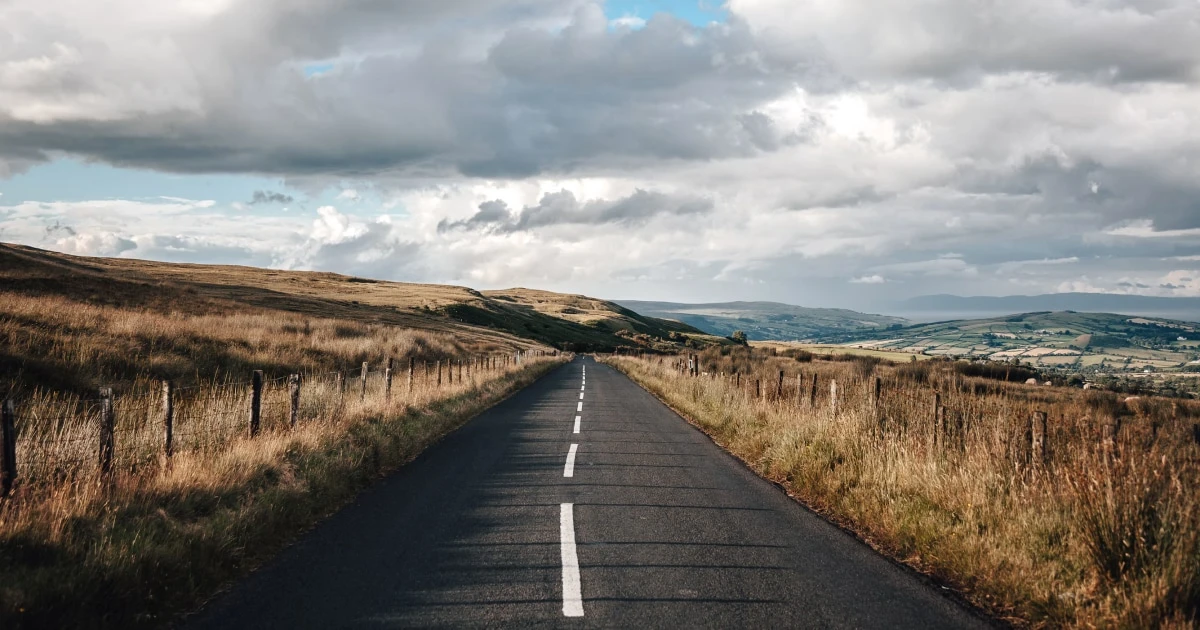
The same road can be a very different journey depending on when you drive it. A stretch that is wet in the morning may be dry in the afternoon. A mountain pass that is clear at midday may become colder and harder to drive through later.
Finding the best time to travel is not just about avoiding traffic. It also means considering the weather along your route, how long the journey will take and how much of it you will drive in daylight.
The most useful approach is to compare departure times and see how the forecast changes at the places you will pass through.
Move your departure time and compare the forecast
Your departure time determines when you are expected to reach each point along the route. If you leave earlier or later, your estimated arrival times change, and so does the forecast associated with each point.
Imagine that rain is expected along the middle of your route in the afternoon. Leaving earlier might mean reaching that section before the rain arrives. Leaving later could mean encountering it after the heaviest showers have passed.
But neither outcome is guaranteed. Weather systems can arrive earlier or later than forecast, and changing your departure time may simply move the difficult conditions to another part of the journey.
When comparing departure times, look at:
- The expected timing of rain and showers.
- Wind speed and gusts on exposed sections.
- Visibility along the route.
- Temperature changes, particularly at higher elevations.
- The expected arrival time at your destination.
The goal is to understand the trade-offs between different departure times, rather than assume that one hour is always better than another.
See how weather changes along your journey
A forecast for your destination cannot tell you everything about a long drive. Conditions can change significantly between your starting point and where you are going.
Rain, wind and poor visibility may affect one section of the route while the rest remains relatively clear. Their timing matters just as much as their location.
For example, a forecast showing rain in the afternoon may be less concerning if you expect to pass through the affected area in the morning. On another route, the same weather system might coincide with your arrival at a mountain pass or an exposed bridge.
Check the forecast for the places you expect to reach at different times. If conditions look challenging, compare another departure time and consider whether an alternative route would make a meaningful difference.
You can use Wayther to explore weather along a planned route, compare available alternatives and review how different departure times affect the forecast during your journey.
Factor in daylight, not just the weather
Departure time also determines how much of your journey takes place in daylight and how much takes place after dark.
Check the day-and-night driving split, including the expected sunrise and sunset along your route. This is particularly important for long journeys, unfamiliar roads and mountain crossings.
An hour of delay might improve the forecast for one section but leave you driving the final part of the journey at night. Darkness can make it harder to see hazards, read the road ahead and respond to changing conditions.
Consider the entire journey before deciding that a later departure is better. A more favourable weather window is not necessarily the best overall option if it creates other difficulties.
Be careful with very early starts
Leaving early can help you make the most of daylight and reach your destination sooner. However, some locations are more prone to fog around sunrise.
Radiation fog can form overnight when the ground cools and moist air near the surface reaches saturation. It is often found in valleys and sheltered areas under suitable conditions. It may dissipate after sunrise as the ground warms, but the timing varies, and some types of fog can persist for much longer.
This means that an early start is not automatically the best choice. If fog is forecast along your route, compare the expected visibility at the time you will reach the affected area.
A slightly later departure might help if the fog is expected to clear, but do not assume that it will disappear within a fixed number of hours.
Read Driving in Fog: How to Read Visibility Along a Route for more guidance.
Plan by departure time or by arrival time
Sometimes you can choose when to leave. In other cases, you need to arrive at a particular time.
If your schedule is flexible, compare departure times to find a journey window with more favourable forecast conditions.
If you have a fixed arrival time, work backwards. Consider how long the trip is expected to take, when you need to leave and what weather you may encounter along the way.
For example, if you need to reach a destination before sunset, the best departure time may be earlier than the one suggested by the weather alone. If strong winds are expected to develop later in the day, an earlier arrival might also help reduce your exposure, provided the forecast supports that decision.
Estimated travel times are not guarantees. Traffic, stops and changes in driving conditions can affect when you actually arrive, so allow a reasonable margin.
Compare alternative routes when timing is not enough
Sometimes no departure time offers a particularly favourable forecast. In that case, consider whether another route could improve the overall journey.
An alternative might avoid a region where heavy rain is expected, cross an exposed area at a different time or follow a route with different terrain. However, a longer route is not necessarily better, and weather can be uncertain across both options.
Compare the forecast along each route rather than looking only at the conditions at the destination. Consider travel time, distance, wind, precipitation and visibility together.
See How to Find the Best Route for a Road Trip for a more detailed comparison.
You can also combine route selection with departure-time planning in How to Plan a Road Trip Around the Weather.
Plan ahead, then check again
You can start planning a journey several days in advance. This gives you time to compare possible departure times, explore alternative routes and identify weather that might affect your plans.
However, a forecast further into the future is generally less certain about the precise timing and location of conditions. A storm expected on a particular afternoon may arrive earlier, later or follow a different path.
A practical approach is to:
- Plan early. Compare departure times and route alternatives to understand your options.
- Review the forecast closer to departure. Check whether the expected timing and severity of conditions have changed.
- Check official warnings. Review relevant weather alerts and road information before leaving.
- Reassess if necessary. If conditions become more hazardous, consider delaying the trip or choosing another route.
Wayther lets you explore departure times up to 10 days ahead. Use that range to compare options, not to assume that the forecast for a specific hour will remain unchanged.
Find the best time for your route with Wayther
The best time to travel is the one that works for the whole journey, not just the first few miles or the destination forecast.
Wayther helps you view forecast conditions along your route, compare alternative routes and explore different departure times. Its map, charts and timeline help you understand how weather may change between the places you pass through and when you expect to arrive.
Start planning early to keep your options open, then check the latest forecast and official warnings before setting off.
Changing your departure time can help you make a better-informed decision, but it cannot guarantee that you will avoid bad weather. Consider the forecast, daylight, travel time and actual conditions together before deciding when to leave.
Frequently asked questions
- What is the best time to start a road trip?
- It depends on the weather forecast along your route, the expected travel time, daylight and the conditions you want to avoid. Compare different departure times and check the forecast for when you expect to reach each part of the journey.
- Is it better to drive early in the morning or later in the day?
- Neither is always better. An early start can leave more daylight for a long journey, but some areas may have overnight or morning fog. Later departures may avoid certain conditions but can push more of the drive into darkness.
- Can changing my departure time help me avoid rain?
- Sometimes. Rain is associated with particular locations and times, so leaving earlier or later may change the conditions you encounter. Forecasts are uncertain, especially several days ahead, so compare the full route and check again before departure.
- How far ahead can I plan the best time to travel?
- Wayther lets you explore departure times up to 10 days ahead. Use early forecasts to compare options, then review the forecast again closer to departure as the timing and details become clearer.
- Should I change my departure time or choose another route?
- Compare both options. A different departure time may help you pass through an affected area before or after a weather system, while an alternative route may offer different conditions. Consider weather, travel time, distance and daylight together.
Before your next journey
Check the forecast for the road ahead.
Wayther is a road trip weather app for drivers, available on iPhone and iPad. It provides hour-by-hour road trip weather at every point on your route, timed to when you'll be there. Compare routes, find the best time to leave, plan 10 days ahead. Try it free.

Keep reading

Driving in Fog: How to Read Visibility Along a Route
Learn how fog affects visibility, why conditions can change during a drive, and how to plan your departure around reduced visibility.

Driving in High Winds: What a Forecast Tells You and What It Doesn't
Learn how wind speed, gusts and direction affect driving, why high-sided vehicles are more vulnerable, and how to check wind forecasts along your route.

How to Find the Best Route for a Road Trip
Compare alternative routes by travel time, distance and weather to find a route that better fits the conditions along the way.