 Wayther

Weather Planning for RV and Trailer Trips
Learn how wind gusts, exposed roads, cold temperatures and mountain weather can affect RV and trailer trips, and how to plan your route around the forecast.
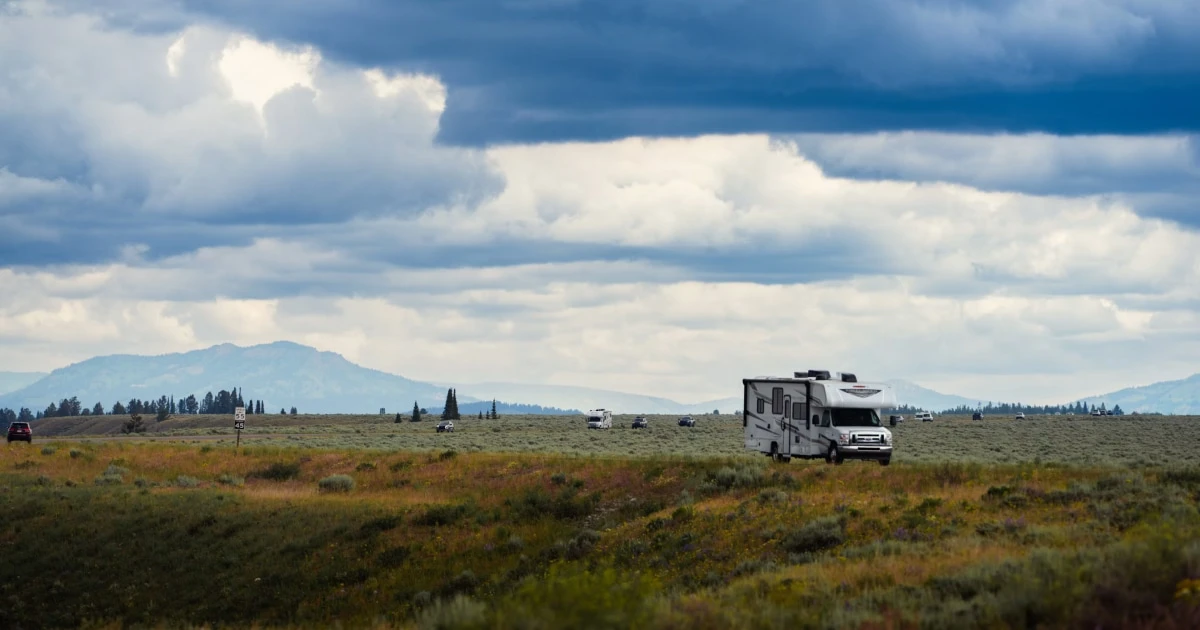
Driving an RV or towing a trailer changes how weather affects a road trip. A large vehicle has a substantial side profile that can catch crosswinds, while a long journey may take you through exposed roads, mountain passes and rapidly changing conditions.
That makes checking the forecast before departure particularly useful. But looking only at the weather where you start or where you plan to camp can leave important gaps.
The key is to understand what conditions you may encounter along the entire route, when you will reach them and whether another departure time or road would be more suitable.
Wind and gusts deserve particular attention
Wind is one of the main weather conditions to consider when driving an RV or towing a trailer.
A large side profile can catch crosswinds, which may push the vehicle sideways and require steering corrections. Sudden gusts can be especially challenging because the force may change quickly as you pass through exposed areas.
Check three things in particular:
- Wind speed: An indication of the prevailing wind conditions.
- Wind gusts: Stronger bursts that can place additional demands on vehicle control.
- Wind direction: Helps you understand whether the wind is likely to come from the side, front or rear relative to your direction of travel.
The effect depends on the vehicle’s size and design, its loading, the road and the surrounding terrain. A motorhome, a lightweight travel trailer and a heavy truck do not respond identically to the same forecast.
There is no single wind-speed threshold that determines whether every RV or trailer can be driven safely. Check the vehicle manufacturer’s guidance, any applicable restrictions and official weather warnings.
For a more detailed explanation, read driving in high winds.
Check wind along the route, not just at the campsite
A forecast for your destination might show calm conditions while the road leading there crosses exposed terrain.
Coastal highways, bridges, open plains and mountain ridges can be more exposed than nearby sheltered areas. Wind conditions can also change during the day.
A route forecast helps you identify where conditions may differ along the journey and when you are expected to reach those sections.
Wayther helps you check weather conditions along your driving route, rather than relying only on forecasts for your starting point and destination. You can inspect the forecast along the way, compare alternative routes and consider whether a different departure time would be more suitable.
For example, an alternative road might avoid a particularly exposed stretch, although it could add distance or introduce other challenges. Compare the complete journeys rather than assuming the shortest route is automatically the best.
See how to find the best route for a road trip.
Mountain passes can bring colder conditions
Temperature generally decreases with altitude in the troposphere, although the actual rate varies with atmospheric conditions.
A commonly cited average environmental lapse rate is about 6.5°C per 1,000 metres. This is only a broad reference, not a reliable way to calculate the exact temperature at a particular mountain pass.
For an RV trip, the difference matters because a route can climb from a mild valley into much colder conditions. Precipitation may also change from rain to snow or a wintry mix as temperatures and elevation change.
Before driving through mountainous terrain, check:
- Forecast temperatures at higher elevations.
- Expected rain, snow or other precipitation.
- Official warnings and mountain-road restrictions.
- Whether your planned route remains suitable for your vehicle.
A forecast cannot confirm the condition of the road surface, so check current road information as well, particularly when temperatures are near freezing.
Choose the day, then choose the departure time
If the forecast looks unfavorable, you may have more than one option. You could leave earlier or later, or postpone the journey until another day.
The best choice depends on how the conditions are expected to evolve and how flexible your plans are. Changing your departure time changes when you reach each point on the route, which may affect the wind, precipitation and temperature you encounter.
With Wayther, you can check the weather along your route and explore different departure times. Wayther supports departure-time planning up to 10 days ahead, giving you a starting point for planning before refining your decision closer to departure.
Long-range forecasts are uncertain, so do not treat a favorable forecast several days ahead as a guarantee.
For a step-by-step approach, see how to find the best time to travel by road.
Compare alternative roads before committing
Two routes through the same region can have different exposure to wind and different weather conditions.
One may cross an open ridge, while another follows a more sheltered valley. The second route is not automatically better, because it could be longer, steeper or affected by different weather.
Compare the alternatives by considering:
- Total travel time and distance.
- Wind and gust forecasts along each route.
- Temperature and precipitation at higher elevations.
- Road restrictions and any vehicle-specific limitations.
Wayther can help you compare route forecasts side by side, so you can weigh the weather against the extra time and distance before choosing a route.
Remember the time of day
A departure-time change can affect more than the weather you encounter.
A delay of an hour or two might turn a daylight arrival into a nighttime drive. That matters when you are unfamiliar with the roads leading to a campsite, navigating narrow access roads or approaching a mountain destination.
Consider when you expect to arrive, not just when you plan to leave. Check temperatures and visibility for the later part of the journey, and leave enough flexibility to stop if conditions deteriorate.
Check the forecast again before you leave
Weather forecasts change, particularly several days ahead. Recheck the evening before departure and again when appropriate on the day of travel.
Pay special attention to strong winds, gusts, precipitation, freezing conditions and official warnings. Check road closures and restrictions through the relevant road authorities, and follow any guidance that applies to your vehicle.
If conditions become difficult while you are travelling, stop somewhere safe before reviewing your options. Never use your phone while driving.
What a route forecast cannot decide for you
A route forecast is a planning tool, not a guarantee of safe driving conditions. It cannot account for every local gust, road-surface issue, temporary restriction or sudden change in weather.
Use it alongside your vehicle manufacturer’s guidance, official weather warnings and current road information. If conditions exceed what you and your vehicle can reasonably handle, delay the journey or choose another plan.
Before your next RV or trailer trip, check the weather along the road, not just at the destination. Wayther helps you inspect conditions along your route, compare alternatives and explore departure times before setting off.
Frequently asked questions
- What weather should I check before driving an RV or towing a trailer?
- Check wind speed and gusts, wind direction, precipitation, temperature and visibility along your route. Pay particular attention to exposed roads, bridges and mountain passes.
- Why are RVs and trailers more affected by wind?
- Their large side profiles can catch crosswinds, while sudden gusts and changes in exposure can make steering more demanding. The effect depends on the vehicle, load, road and wind conditions.
- How can I find a better time to drive my RV?
- Check the forecast along your route and compare departure times. Wayther helps you explore how conditions may change at different times and compare alternative routes.
- Can I use a wind forecast to decide whether it is safe to tow?
- A forecast can help identify potentially challenging conditions, but there is no universal wind-speed threshold that makes every vehicle safe or unsafe. Follow your vehicle manufacturer's guidance, official warnings and road restrictions.
Before your next journey
Check the forecast for the road ahead.
Wayther is a road trip weather app for drivers, available on iPhone and iPad. It provides hour-by-hour road trip weather at every point on your route, timed to when you'll be there. Compare routes, find the best time to leave, plan 10 days ahead. Try it free.

Keep reading
How to Find the Best Time to Travel by Road
Find the best time to start a road trip by comparing weather along your route, expected arrival times and daylight before you leave.
Driving in High Winds: What a Forecast Tells You and What It Doesn't
Learn how wind speed, gusts and direction affect driving, why high-sided vehicles are more vulnerable, and how to check wind forecasts along your route.

How to Find the Best Route for a Road Trip
Compare alternative routes by travel time, distance and weather to find a route that better fits the conditions along the way.