 Wayther

Weather Planning for Truck Drivers
Plan long-haul routes around wind, rain, visibility and temperature. Learn how to check weather along the route and adjust departure times before conditions cause delays.
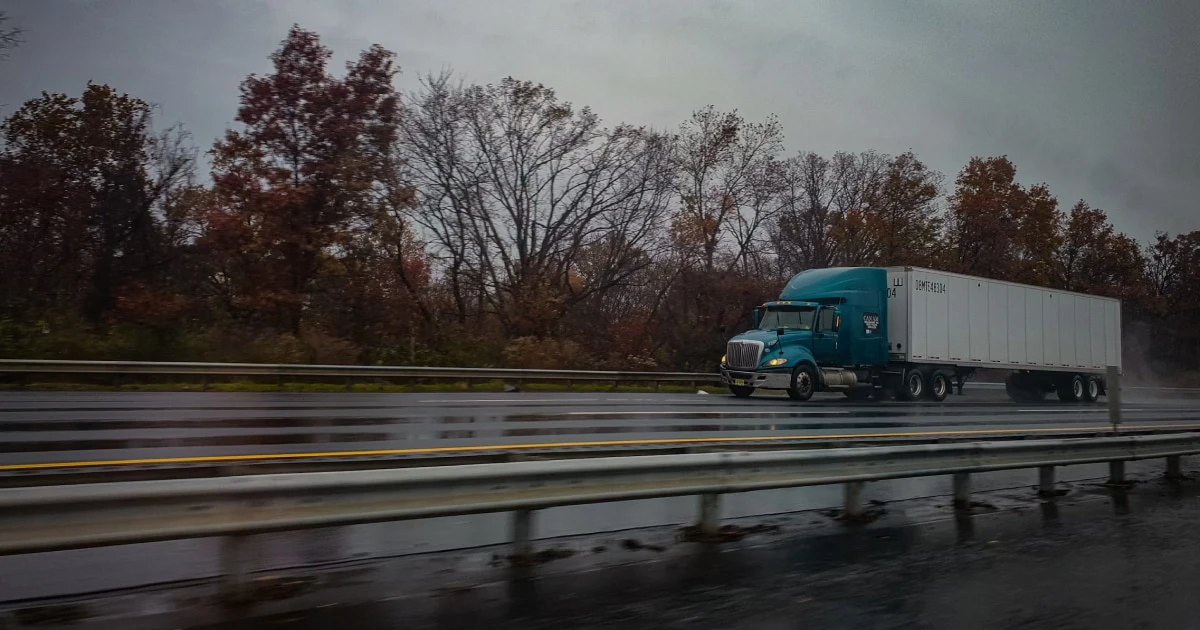
A long-haul truck can cross several weather systems in a single shift. Conditions at the depot may be calm while the route ahead brings strong crosswinds, heavy rain, fog or freezing temperatures.
Checking the weather at the start and destination is not enough. For a long journey, the important question is what conditions you are likely to encounter along the way and when you will reach them.
A route-based forecast helps you plan around those changes, assess alternative roads and consider whether a different departure time could make the journey more manageable.
Wind gusts matter more than averages alone
Wind deserves particular attention when driving a truck, especially when towing a high-sided trailer.
Crosswinds can push against the side of a vehicle, while sudden gusts can produce rapid changes in force. The effect depends on the vehicle and trailer, their loading, the road layout and how exposed the route is.
Check three elements of the forecast:
- Wind speed: Indicates the prevailing wind conditions.
- Wind gusts: Shows the potential for stronger, short-lived bursts.
- Wind direction: Helps you understand whether the wind is likely to act as a headwind, tailwind or crosswind relative to your direction of travel.
A forecast of moderate average wind speed can conceal stronger gusts. Equally, the same wind may affect an exposed bridge or open stretch differently from a sheltered section.
Wayther helps you check forecast conditions along your route, so you can identify where wind conditions may change during the journey rather than relying on a single reading for the day.
For more detail, see driving in high winds.
Wind direction matters too
Wind direction is not just an additional number on a forecast.
A crosswind pushes against the side of a truck and trailer. A headwind can increase aerodynamic resistance and fuel consumption, while a tailwind can reduce it. The actual effect depends on vehicle orientation, speed and local conditions.
Wind can also change direction along a route. A road that initially runs into the wind may turn across it farther ahead, changing the exposure of the vehicle.
When comparing routes, consider both the forecast wind and the roads themselves. Open plains, bridges, coastal roads and elevated sections may be more exposed than sheltered alternatives.
Do not rely on a universal wind-speed threshold to decide whether driving is safe. Follow your company’s procedures, vehicle-manufacturer guidance, official warnings and any applicable restrictions.
Plan around arrival times, not just distances
On a long haul, weather conditions can change considerably between departure and arrival.
A section of road may have strong winds in the morning but more favorable conditions later. Fog may affect an early departure, while rain may be expected farther along the route in the afternoon.
Changing your departure time changes when you reach each forecast point. That makes timing an important part of route planning.
With Wayther, you can check the weather along your route and explore different departure times to understand how the forecast may change throughout the journey.
When assessing a different departure, consider more than the weather:
- Does it move the most challenging section into more favorable conditions?
- Will it affect your planned arrival time?
- How much of the journey will take place in daylight?
- Does the change fit your legal driving hours, rest breaks and delivery schedule?
Weather planning should complement hours-of-service requirements, dispatch procedures and safe-driving practices, not override them.
For a more detailed method, read how to find the best time to travel by road.
Rain and visibility can affect the schedule
Rain can reduce visibility, increase stopping distances and create standing water. Spray from other vehicles can make it harder to see, particularly in heavy traffic or poor lighting.
Fog introduces a different visibility problem. It may be concentrated in valleys or low-lying areas and can affect only part of an otherwise clear route.
Check precipitation and visibility together. A route forecast can help you identify where these conditions are expected and when you are likely to reach them.
Avoid assuming that fog will clear at a predictable time. Its duration depends on local weather conditions, and a forecast cannot guarantee that visibility will improve by a particular hour.
If conditions deteriorate, adjust your driving to the conditions and follow applicable safety guidance. Never use a phone or consult a route forecast while driving.
See our guides to fog and visibility and rain and road conditions.
Temperature and conditions on mountain routes
Long-haul routes may cross mountain passes where temperatures differ substantially from those in nearby valleys.
In the troposphere, temperature generally decreases with altitude, although the actual rate varies with atmospheric conditions. The average environmental lapse rate is often approximated as 6.5°C per 1,000 metres, but this is not a reliable formula for predicting the temperature at a particular location.
When driving through higher terrain, check the forecast for temperature and precipitation along the route. Rain at lower elevations may coincide with snow or other wintry conditions higher up.
Freezing rain is particularly hazardous because it can create a thin layer of ice on road surfaces. Temperatures near freezing, precipitation and official winter-weather warnings deserve close attention.
Before committing to a mountain route, check current road conditions, restrictions and requirements that apply to your vehicle.
Compare routes before committing to a haul
The shortest route is not always the most suitable route for the conditions.
An alternative road might avoid an exposed section, a forecast area of heavy precipitation or a mountain pass affected by winter weather. It may also add distance, time or other operational constraints.
Compare the full journey:
- Review wind, gusts, precipitation, visibility and temperature along the planned route.
- Identify the sections where conditions may be challenging.
- Compare alternative routes and their expected travel times.
- Check whether changing your departure time would improve the forecast at those sections.
- Consider the impact on delivery commitments, legal driving hours and rest periods.
Wayther lets you compare route forecasts and departure times, helping you assess weather as one factor in your planning. It does not account for every operational constraint, so use your normal dispatch and navigation tools alongside it.
Read how to find the best route for a road trip for more on comparing alternatives.
Check the forecast again before departure
Forecasts change, and the uncertainty generally increases further ahead in time. An initial plan is a starting point, not a guarantee of the conditions you will encounter.
Check the forecast again before departure and monitor official weather warnings, road closures and restrictions. For a multi-day haul, review conditions before each driving leg.
If severe weather develops, follow company procedures and official guidance. Do not continue into conditions that exceed the capabilities of your vehicle or the limits of safe operation simply to maintain a schedule.
What Wayther can and cannot do
Wayther helps you check weather conditions along a route, compare alternatives and explore departure times. It is a planning aid, not a truck navigation system or a source of official road-closure information.
It cannot guarantee that a route will be safe, predict every local gust or account for every restriction affecting a particular load or vehicle. Keep using your professional navigation, dispatch and road-information tools, and follow applicable regulations and official warnings.
Before your next long haul, check the weather along the entire route, not just at either end. Wayther helps you assess the forecast ahead and compare route and departure options before you set off.
Frequently asked questions
- What weather should truck drivers check before a long haul?
- Check wind speed and gusts, wind direction, precipitation, visibility and temperatures along the full route. Consider when you will reach exposed roads and higher elevations, and check official warnings and road restrictions.
- Why are wind gusts important for truck drivers?
- Gusts can cause sudden changes in wind force, which may affect vehicle control, particularly for high-sided vehicles and trailers on exposed roads.
- Can Wayther help truck drivers plan around bad weather?
- Wayther shows forecast conditions along a route and helps compare alternative routes and departure times, making it easier to assess how expected weather may affect a journey.
- Can changing departure time help avoid bad weather?
- Sometimes. Leaving earlier or later changes when you reach each point on the route, which may help you avoid a period of unfavorable weather. Forecasts are uncertain, so recheck conditions before departure.
Before your next journey
Check the forecast for the road ahead.
Wayther is a road trip weather app for drivers, available on iPhone and iPad. It provides hour-by-hour road trip weather at every point on your route, timed to when you'll be there. Compare routes, find the best time to leave, plan 10 days ahead. Try it free.

Keep reading

Driving in Fog: How to Read Visibility Along a Route
Learn how fog affects visibility, why conditions can change during a drive, and how to plan your departure around reduced visibility.

Driving in High Winds: What a Forecast Tells You and What It Doesn't
Learn how wind speed, gusts and direction affect driving, why high-sided vehicles are more vulnerable, and how to check wind forecasts along your route.

Driving in Rain: Reading Road Conditions Along Your Route
Learn how steady rain, showers and freezing rain differ, how precipitation affects visibility, and how to check conditions along your driving route.