 Wayther

Driving a Motorhome Through Mountain Passes
Prepare your motorhome for mountain passes with practical advice on changing weather, wind, steep gradients, braking and route planning.
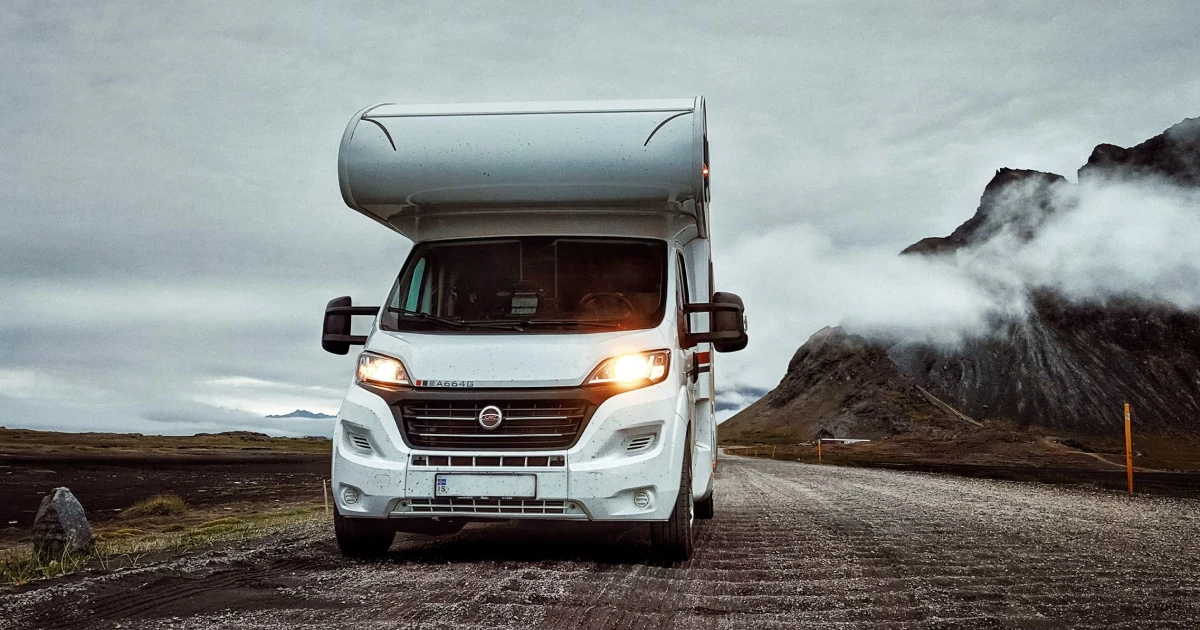
A motorhome trip through the mountains can take you from a sunny valley to cold, windy conditions at higher elevations in a relatively short distance. The road may become narrower, steeper and more exposed, while visibility and precipitation can change quickly.
For motorhome drivers, the challenge is not just the weather. Vehicle height, weight, dimensions and braking behaviour all influence how manageable a mountain route will be.
Before setting off, check the forecast along the entire route, confirm that the pass is open and suitable for your vehicle, and allow enough time to adapt your plans. If conditions are severe, postponing the crossing may be the most sensible decision.
1. Check the weather at different elevations
A forecast for the nearest town may not reflect the conditions at the top of a mountain pass. Temperatures can be lower at higher elevations, while wind, cloud and precipitation can vary between valleys, ridges and exposed slopes.
Before your journey, check:
- Temperature: Conditions near freezing deserve particular attention, especially if precipitation is expected.
- Rain and snow: Precipitation may fall as rain in a valley and snow higher up, depending on the temperature profile.
- Wind and gusts: Exposed sections, bridges and ridgelines may experience stronger or more disruptive winds than sheltered areas.
- Visibility: Low cloud, fog, snowfall and heavy rain can reduce visibility around bends and narrow sections.
- Forecast timing: Conditions may change between your departure and the time you reach the pass.
Do not assume that a dry forecast at your starting point means the entire crossing will be dry. Check the forecast for the approach, the higher sections and the descent where possible.
Wayther helps you explore forecast weather at points along your driving route. This can help you identify where conditions may change, but it does not confirm the actual state of the road or whether a pass is open.
2. Confirm that the mountain pass is open
A weather forecast and a road-status update answer different questions.
The forecast may indicate snow, freezing temperatures or strong winds, but it cannot establish whether the road is open, whether snow has been cleared or whether restrictions apply to your vehicle.
Before leaving, check official road information for the region you are travelling through. Depending on the country and route, this may include:
- Temporary closures and vehicle restrictions.
- Snow and ice conditions.
- Winter-equipment requirements.
- Roadworks and traffic disruptions.
- Advice from local authorities or road operators.
Mountain passes can close at short notice because of snow, avalanche risk, rockfalls, accidents or other hazards. A route that was open when you planned your trip may not remain open when you arrive.
If a pass is closed, follow the signed diversion and official instructions. Do not attempt an unofficial shortcut on a narrow or unfamiliar mountain road simply because it appears shorter on a map.
3. Understand how altitude changes the driving conditions
Weather and road conditions can change over a relatively short distance in mountainous terrain.
Temperature and ice
Air temperature generally decreases with altitude, although local conditions vary. A road that is wet in a valley may encounter freezing conditions higher up, particularly in shaded areas or near the beginning and end of the day.
A forecast temperature near or below freezing is a reason to check for winter conditions, not proof that a particular section is icy. Road-surface temperatures and maintenance can differ from the air temperature.
If winter weather is expected, confirm that your motorhome has the required equipment for the countries and areas on your route. In France, specific mountain areas have winter-equipment requirements during the legally defined period. Check the applicable local rules before travelling.
Fog and low cloud
Mountain roads can pass through cloud or fog, sometimes with little warning. Visibility may deteriorate around bends or at exposed sections.
If visibility is poor, reduce speed to suit the conditions and ensure that you can stop within the distance you can see clearly. Do not rely on a forecast to tell you exactly where fog will form.
Read Driving in Fog: How to Read Visibility Along a Route for more guidance.
Rain and thunderstorms
Heavy rain can reduce visibility and grip. In steep terrain, runoff, debris or local flooding may also affect the route.
Thunderstorms can bring intense precipitation and gusty winds. If severe weather is forecast around a mountain crossing, consider delaying the trip rather than trying to pass through the area at a particular time.
For more information, see Driving in Thunderstorms: What to Check Before You Leave.
4. Pay particular attention to wind
Motorhomes have a relatively large side profile. Strong crosswinds and sudden gusts can affect vehicle stability, especially on exposed roads, bridges and open mountain sections.
The risk depends on several factors, including the vehicle’s height, dimensions, loading, speed, road layout and wind direction. There is no single wind-speed threshold that guarantees every motorhome will be safe to drive.
Before setting off:
- Check sustained wind speeds and gust forecasts along the route.
- Pay attention to exposed ridges, bridges and open sections.
- Consider whether the motorhome manufacturer provides specific wind or operating guidance.
- Review official warnings and any restrictions for high-sided vehicles.
If strong winds are expected, postponing the crossing may be more appropriate than relying on driving technique alone. If you encounter unexpectedly severe gusts, do not continue simply to keep to your schedule. Find a suitable place to stop when it is safe to do so.
Read Driving in High Winds: What a Forecast Tells You and What It Doesn’t.
5. Prepare for steep climbs and descents
Mountain passes can involve long gradients, tight bends and limited opportunities to stop. A heavy motorhome behaves differently from a smaller car, particularly on a descent.
Before climbing
Check the route’s gradient, length, road width and restrictions. Make sure the vehicle’s weight and dimensions are appropriate for the road, and avoid assuming that every route suggested by a navigation app is suitable for a large motorhome.
On a long climb, monitor the vehicle’s temperature gauges and follow the manufacturer’s guidance. If the engine or another system shows a warning, respond according to the vehicle manual and stop safely when necessary.
Before descending
A long descent can put significant demands on the braking system. Select an appropriate gear before the descent and use engine braking where the vehicle permits it. Follow the manufacturer’s instructions for automatic transmissions, engine braking and any auxiliary braking systems.
Avoid riding the brakes continuously, as this can lead to overheating. Do not rely on engine braking alone when the situation requires braking, and never exceed a speed that allows you to negotiate bends safely.
Reduce speed before a bend rather than braking sharply while turning. Leave enough distance from the vehicle ahead, especially when the road is wet or visibility is limited.
Weather planning cannot replace knowledge of the vehicle’s handling limits. If the route appears too steep, narrow or exposed for your motorhome, choose a more suitable road.
6. Compare the route, not just the distance
The shortest route is not necessarily the most appropriate route for a motorhome.
An alternative may avoid a high pass, but it could add many kilometres, involve other steep sections or take you through a region with worse weather. Compare the whole journey before deciding.
Consider these factors:
| Factor | What to check |
|---|---|
| Elevation | Major climbs, descents and high-altitude sections |
| Road type | Width, surface, bends and suitability for your vehicle |
| Weather | Wind, precipitation, temperature and visibility along the route |
| Restrictions | Closures, height limits, weight limits and vehicle restrictions |
| Timing | Expected conditions when you reach the most exposed sections |
| Alternatives | A practical detour or a suitable place to wait if conditions worsen |
Wayther can help compare forecast weather along available routes and at different departure times. It is a weather-planning tool, not a specialist motorhome routing system. Verify vehicle restrictions, dimensions, gradients and road status separately before committing to a route.
For a broader approach, see How to Find the Best Route for a Road Trip.
7. Decide when to delay the crossing
A forecast does not always mean you need to change your plans. Light rain or a moderate temperature change may be manageable with appropriate preparation. Severe conditions require a different response.
Consider delaying the crossing when:
- Official advice recommends avoiding travel.
- Heavy snow, freezing rain or dangerous ice is expected.
- Strong winds could make the vehicle difficult to control.
- Visibility is expected to be severely reduced.
- The pass may close or vehicle restrictions could apply.
- You do not have the required equipment or confidence to manage the route.
If you have flexibility, compare departure times to see whether conditions are expected to improve. However, do not assume that a few hours will make a dangerous route safe. Weather forecasts are uncertain, and road conditions may take longer to improve than the weather itself.
A safe alternative may be to stay overnight at an appropriate location and reassess the route the next day.
8. Build a mountain-weather plan before leaving
A simple preparation routine can help you identify problems before you reach the pass.
Several days before
- Review the forecast for the whole route.
- Identify major climbs, high passes and exposed sections.
- Compare alternative routes if conditions may be difficult.
- Check the motorhome’s dimensions against route restrictions.
- Confirm any seasonal equipment requirements.
The day before
- Check updated forecasts for temperature, wind, precipitation and visibility.
- Review official road information and closures.
- Prepare winter equipment if it is required or appropriate.
- Make sure the motorhome is ready for the journey.
- Identify places where you could stop or wait if conditions deteriorate.
Just before departure
- Check for new weather alerts and road restrictions.
- Confirm the pass is open and suitable for your vehicle.
- Reassess whether the forecast makes the crossing reasonable.
- Allow extra time and avoid a schedule that forces you to continue in poor conditions.
During the journey
- Follow road signs and official instructions.
- Adjust speed to visibility, grip, gradient and vehicle handling.
- Keep a safe distance and avoid abrupt braking or steering.
- Stop somewhere appropriate if conditions become unsafe.
- Check updates only when parked safely or through a passenger.
9. Motorhome mountain-pass checklist
Use this checklist before a mountain crossing:
- Check the forecast at different elevations along the route.
- Review wind speeds, gusts, precipitation and visibility.
- Confirm that the pass is open and check for vehicle restrictions.
- Check local winter-equipment requirements.
- Verify the route is suitable for your motorhome’s height, width, weight and length.
- Check tyres, brakes, lights, wipers and vehicle condition.
- Understand how to use the vehicle’s gears and engine braking on long descents.
- Identify alternative routes and suitable places to stop.
- Allow extra time and be prepared to postpone the crossing.
Conclusion
Driving a motorhome through a mountain pass requires more than checking the weather at your destination. Temperature, wind, precipitation and visibility can change with elevation, while steep gradients and vehicle dimensions add their own challenges.
Check the forecast along the entire route, confirm road status and restrictions, and make sure the pass is suitable for your vehicle. If official warnings or severe conditions make the crossing hazardous, delay the journey or choose a more appropriate alternative.
Wayther can help you understand how forecast weather may change along your route and compare departure times or available alternatives. Combine that information with official road updates and vehicle-specific route planning before heading into the mountains.
Frequently asked questions
- What weather should I check before driving a motorhome through a mountain pass?
- Check temperature, precipitation, wind, visibility and any official weather alerts along the full route. Conditions can differ between valleys and higher elevations, so also check road restrictions and the latest information from local authorities.
- Are mountain passes safe for motorhomes in strong winds?
- It depends on wind speed and gusts, the motorhome's size and profile, road exposure and official restrictions. High-sided vehicles can be more affected by crosswinds. If conditions are severe or driving feels unsafe, postpone or stop somewhere appropriate.
- Can a weather forecast tell me if a mountain pass is open?
- No. A weather forecast describes expected atmospheric conditions but does not confirm whether a road is open, closed, icy or cleared of snow. Check official road information separately.
- Should I drive a motorhome over a mountain pass in winter?
- Only if the route is open, your vehicle and equipment are suitable, and the expected conditions are manageable. Check local winter-equipment requirements and consider postponing if snow, ice or poor visibility could make the journey hazardous.
Before your next journey
Check the forecast for the road ahead.
Wayther is a road trip weather app for drivers, available on iPhone and iPad. It provides hour-by-hour road trip weather at every point on your route, timed to when you'll be there. Compare routes, find the best time to leave, plan 10 days ahead. Try it free.

Keep reading
Driving in Snow and Ice: Planning Around Winter Weather
Learn how to plan a winter road trip around snow, freezing temperatures, and icy conditions, using weather forecasts to choose when and where to drive.
Driving in High Winds: What a Forecast Tells You and What It Doesn't
Learn how wind speed, gusts and direction affect driving, why high-sided vehicles are more vulnerable, and how to check wind forecasts along your route.
How to Plan a Road Trip Around the Weather
Plan your route, compare weather along the way, and find a better departure time. A step-by-step guide to planning a road trip around the forecast.