 Wayther

Should You Change Your Route or Your Departure Time?
Learn when to change your driving route, delay departure or keep your original plan when bad weather is forecast.
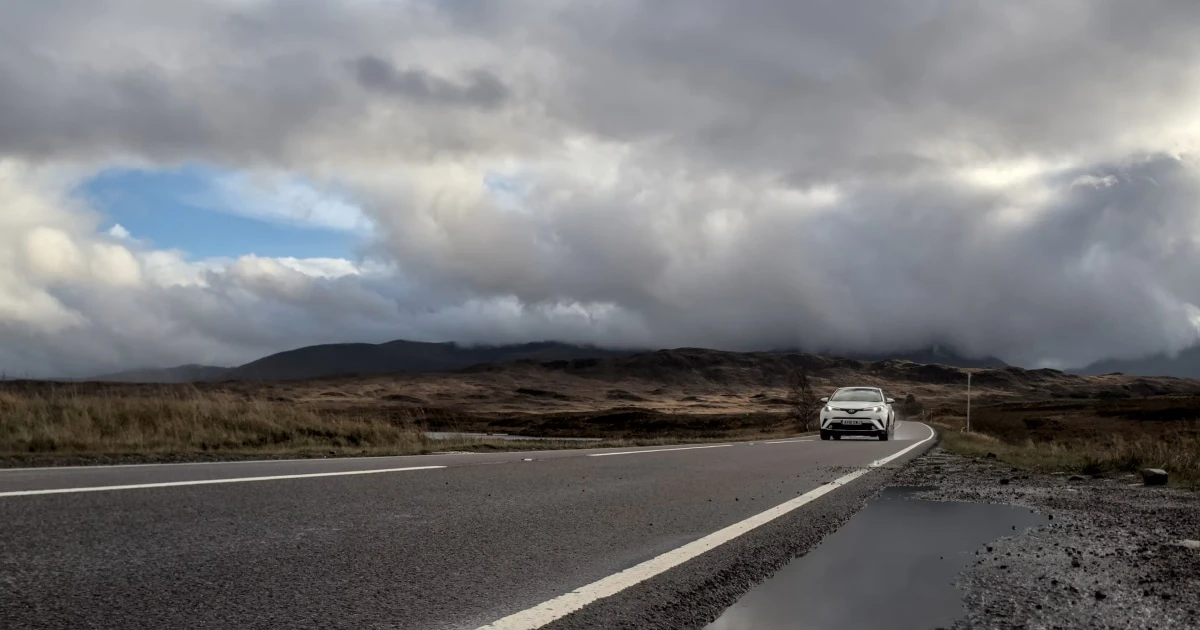
When bad weather is forecast for a road trip, you have three main options: keep your original plan, leave at a different time or take another route.
The right choice depends on where the weather is expected, when you will reach it and how much flexibility you have. A route that looks better on a weather map may be longer, more exposed or less suitable for your vehicle. Leaving earlier may avoid rain in one area but put you on the road during fog or freezing conditions elsewhere.
Instead of reacting to one forecast icon, compare the conditions for the whole journey. This guide explains how to make that decision.
1. Start by identifying the weather problem
Before changing your plans, establish what conditions are expected and where they may affect your drive.
Different weather conditions call for different responses.
- Heavy rain: You may need to allow more time, consider a different departure window or avoid a route where severe precipitation is expected.
- Strong winds: An alternative route may be less exposed, particularly if you are driving a high-sided vehicle or towing a trailer.
- Fog: Delaying departure could help if visibility is expected to improve, but the timing and location of fog can be uncertain.
- Snow or ice: Check official warnings, road restrictions and winter-equipment requirements. Postponing may be more appropriate than trying to avoid a particular section.
- Extreme heat: Changing the departure time may improve comfort, but consider driver fatigue, daylight and conditions at the destination.
- Thunderstorms: Compare the forecast timing and follow official warnings. A different route does not necessarily remove the risk.
Do not assume that every period of rain or wind requires a change. The severity, duration and location of the conditions matter, as do the road type and your vehicle.
For practical advice on specific conditions, see How to Plan a Long Drive in Bad Weather.
2. First, decide whether you should travel at all
Before comparing routes or departure times, consider whether the journey should go ahead.
If official warnings recommend avoiding travel, or if conditions could make the drive dangerous, postponing or cancelling may be the most appropriate option. A route with a more favourable forecast is not necessarily safe, and a different departure time cannot guarantee that the weather will improve.
This matters particularly when the journey involves:
- Mountain passes or roads with steep gradients.
- Areas at risk of flooding, snow or ice.
- Exposed bridges or roads affected by strong winds.
- Long stretches with few alternative roads or places to stop.
- A vehicle that is especially sensitive to wind or difficult conditions.
Check official weather alerts and road information before making a decision. Weather forecasts describe expected atmospheric conditions; they do not confirm whether a particular road is open, flooded, icy or safe.
If the journey can reasonably be postponed, compare the forecast for another date rather than focusing only on alternative routes for the same day.
3. When changing your departure time makes more sense
Changing the departure time is often the simplest option when difficult weather is expected to affect a specific period rather than the entire day.
For example, heavy rain may be forecast across a region in the afternoon. Leaving earlier could allow you to pass through before it arrives. Alternatively, delaying departure could help you avoid a period of morning fog or freezing conditions.
The important question is not whether the weather looks better at your starting point. It is whether the change improves conditions during the parts of the journey that matter most.
Compare the forecast at different times
For each possible departure time, consider:
- Conditions near your starting point.
- Weather expected halfway through the route.
- Conditions around the most exposed or difficult sections.
- The expected weather near your destination.
- Whether you will be driving in darkness or arriving when tired.
A later departure may avoid one problem while creating another. For example, waiting for fog to clear could mean reaching a mountain road after dark. An early start may avoid afternoon heat but introduce a risk of frost.
Compare the whole journey before deciding.
Consider the practical cost of leaving later
A departure change can affect more than the drive itself. You might miss a booking, arrive after check-in closes or have less time for breaks.
If the weather is expected to improve later, consider whether the benefit justifies those changes. If conditions remain uncertain, preserve flexibility rather than committing to a precise arrival time.
For a more detailed method, read How to Find the Best Time to Travel by Road.
4. When changing your route makes more sense
An alternative route may be worth considering when the difficult weather is concentrated in one part of the journey and another practical road avoids or reduces your exposure to it.
For example, one route may cross an exposed mountain pass while another follows a lower-altitude road. A coastal route may be more exposed to crosswinds than an inland alternative. However, the second route is not automatically better: it may be longer, include more bends or pass through a different area with its own weather risks.
Compare the following factors:
| Factor | What to consider |
|---|---|
| Weather | Precipitation, wind, temperature and visibility along the full route |
| Distance | How much additional driving the alternative requires |
| Road type | Motorways, narrow roads, mountain passes and exposed sections |
| Elevation | Whether the alternative includes higher or lower terrain |
| Timing | When you would reach the most difficult sections |
| Vehicle | Whether the route is suitable for your car, motorhome or towing setup |
| Road status | Closures, restrictions and current travel advice |
Do not choose an alternative based on a single point with better weather. Conditions can vary throughout the route, and a detour may introduce new risks or delays.
Read How to Compare Two Routes by Weather, Not Just Distance for a more detailed comparison.
5. Compare both options before making a decision
A useful comparison considers the original route and departure time against realistic alternatives.
Imagine you are planning a four-hour drive. Heavy rain is forecast on the middle section of your original route around midday.
You could:
- Leave earlier and pass through the region before the expected rain.
- Leave later if the forecast suggests conditions may improve.
- Take another route that avoids the affected area.
- Keep the original plan if conditions are manageable and there is no compelling reason to change.
- Postpone the journey if the expected conditions could make travel unsafe.
Each option has trade-offs. Leaving earlier may mean driving in darkness. Leaving later may affect your arrival time. A detour may add distance without avoiding the weather entirely.
The decision should be based on the forecast for the complete journey, not simply on which option displays the fewest weather markers.
A practical comparison table
| Question | Original plan | Alternative |
|---|---|---|
| Is the forecast more favourable? | Check the conditions along the full route | Compare the same weather variables |
| How long is the journey? | Include likely delays and breaks | Include the extra distance and time |
| Are the roads suitable? | Check restrictions and road type | Verify the alternative is appropriate |
| What happens at arrival? | Consider daylight and fatigue | Check the revised arrival time |
| Is the journey appropriate? | Follow official advice | Do not assume a detour removes the risk |
Wayther helps you explore forecast weather along a route and compare available route alternatives or departure times. Pair those comparisons with a navigation service for routing and official sources for road closures and restrictions.
6. Understand the limitations of weather forecasts
Forecasts are estimates, not guarantees. Their level of detail and certainty depends on the forecast lead time, weather situation and location.
Several days before departure, a forecast can help you identify broad patterns and possible alternatives. It may not reliably predict the exact time a rain band will cross a particular road or where a localised fog patch will form.
As the journey approaches, review the forecast again. Pay attention to whether the expected conditions are becoming more consistent or whether different forecasts still suggest a range of possibilities.
A useful planning approach is:
- Several days ahead: Identify possible route and departure-time alternatives.
- The day before: Review updated forecasts and official warnings.
- Before leaving: Confirm the latest weather, traffic and road information.
- During the journey: Reassess conditions when safe to do so.
Do not treat a forecast several days ahead as a reason to make an irreversible decision unless the potential consequences justify it. Equally, do not ignore official warnings simply because the forecast may change.
For more on forecast uncertainty, see Why Weather Forecasts Change Along a Road Trip.
7. Think about the road, not just the weather
A forecast with less rain or wind does not automatically make a route preferable.
The road itself affects how manageable the journey will be. A longer motorway route may be easier to drive than a shorter route through narrow mountain roads. An alternative with fewer exposed sections may be useful for a high-sided vehicle, but only if it is suitable for the vehicle’s dimensions and weight.
Before changing your route, check:
- Road closures and temporary restrictions.
- Height and weight limits where relevant.
- Mountain-pass status and winter-equipment requirements.
- Traffic and likely delays.
- Places to stop if conditions deteriorate.
- Whether the route remains practical if the weather changes again.
This is particularly important when travelling with a motorhome, caravan or trailer. A route that is appropriate for a passenger car may not be appropriate for every vehicle.
Wayther is designed to help you understand forecast weather along your route. It does not confirm real-time road-surface conditions, identify every road hazard or guarantee that a route is safe.
8. What if both the route and the departure time look difficult?
Sometimes there is no clear alternative. Bad weather may affect a large region for much of the day, or all available routes may involve challenging conditions.
In that situation, avoid forcing a decision between two poor options simply because the trip is already planned.
Consider:
- Postponing the journey until conditions improve.
- Splitting a long drive into shorter stages.
- Staying overnight and reassessing the forecast the next day.
- Changing the destination or postponing an outdoor activity.
- Using a different mode of transport if that is practical.
If the journey is essential, follow official advice and plan around the safest practical option available. Allow additional time and be prepared to stop if conditions deteriorate.
The aim is not to find a route with perfect weather. It is to understand the risks, avoid unnecessary exposure and make a decision that remains reasonable under the expected conditions.
9. A simple decision checklist
Before changing your plans, work through these questions:
- Have I checked the forecast along the entire route, rather than only at the start and destination?
- Do I know which weather conditions are causing concern?
- Have I checked official weather warnings and road information?
- Would leaving earlier or later meaningfully change the conditions I would encounter?
- Is there a practical alternative route, and is it suitable for my vehicle?
- Have I compared total driving time, daylight, breaks and arrival conditions?
- Is the journey still appropriate, or would postponing be a better option?
- Have I left enough flexibility to change plans if the forecast evolves?
If the answers are unclear, review the forecast again closer to departure rather than assuming that the first option you considered is the best one.
Conclusion
Changing your route or departure time can help you respond to unfavourable weather, but neither option is automatically better. The right decision depends on where the difficult conditions are expected, when you will encounter them, the suitability of the roads and whether the journey should go ahead at all.
Compare the full route at different departure times, check official warnings and road information, and allow for forecast uncertainty. If conditions could make the journey unsafe, postpone it rather than relying on a detour to solve the problem.
Wayther can help you compare forecast conditions along your route and explore alternative routes or departure times. Use it alongside navigation, updated forecasts and official road information to make a more informed decision before you leave.
Frequently asked questions
- Is it better to change my route or leave later because of bad weather?
- It depends on where and when the difficult conditions are expected. Compare the full forecast along each route and at different departure times, then consider road type, journey duration, daylight and official travel advice.
- Should I take a longer route to avoid rain?
- Not automatically. A longer route may encounter different weather, take more time or use less suitable roads. Compare the conditions along the entire journey and check official road information before deciding.
- How far ahead should I decide whether to change my route?
- Use forecasts several days ahead to identify possible alternatives, but treat details as provisional. Recheck the forecast and official warnings the day before and shortly before departure.
- Should I drive if severe weather is forecast?
- If official advice recommends avoiding travel or conditions may make the journey unsafe, consider postponing or cancelling it. A different route or departure time cannot guarantee safe conditions.
Before your next journey
Check the forecast for the road ahead.
Wayther is a road trip weather app for drivers, available on iPhone and iPad. It provides hour-by-hour road trip weather at every point on your route, timed to when you'll be there. Compare routes, find the best time to leave, plan 10 days ahead. Try it free.

Keep reading
How to Find the Best Time to Travel by Road
Find the best time to start a road trip by comparing weather along your route, expected arrival times and daylight before you leave.

How to Compare Two Routes by Weather, Not Just Distance
Learn how to compare alternative driving routes by forecast weather, travel time, and exposure to rain, wind, snow, and other challenging conditions.
How to Plan a Road Trip Around the Weather
Plan your route, compare weather along the way, and find a better departure time. A step-by-step guide to planning a road trip around the forecast.