 Wayther

How to Compare Two Routes by Weather, Not Just Distance
Learn how to compare alternative driving routes by forecast weather, travel time, and exposure to rain, wind, snow, and other challenging conditions.
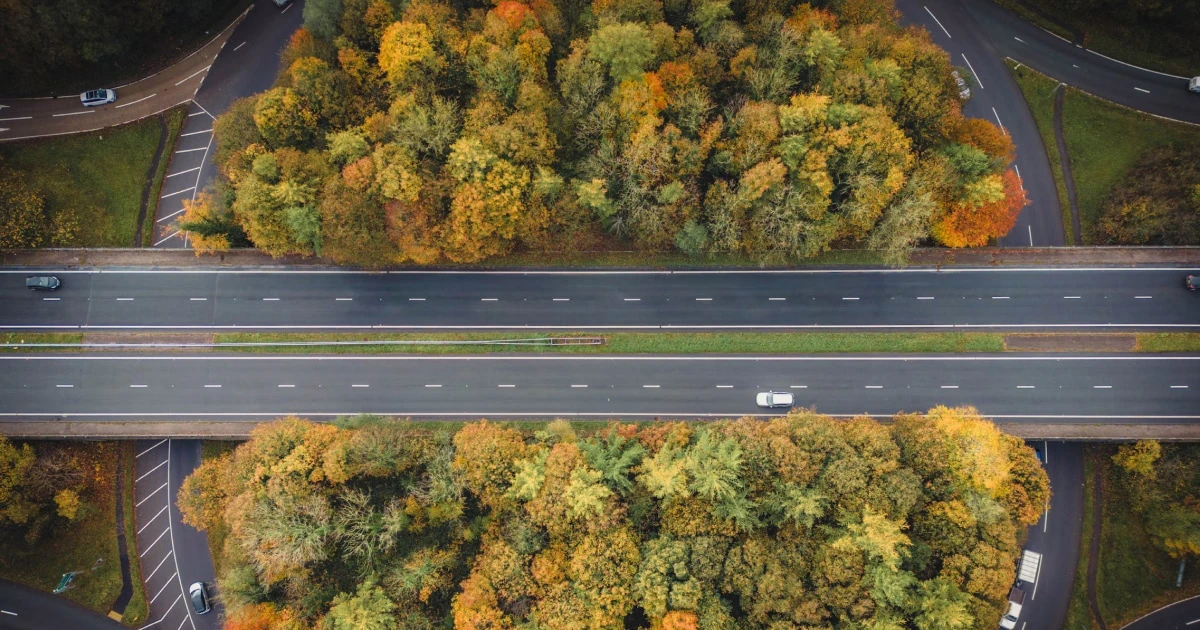
One route may take you through heavy rain, strong crosswinds, or a mountain pass where winter conditions are possible. Another may be longer but encounter different forecast conditions at the time you travel.
That does not automatically make the longer route better. You need to consider the weather across the entire journey, how long you will spend driving, and how conditions may change before you reach each section.
Here is how to compare two routes by weather and make a more informed decision before setting off.
Why route choice matters for weather
Weather is not uniform across a region. Two roads connecting the same places can pass through different terrain and encounter different conditions.
For example:
- A coastal route may be exposed to stronger winds.
- An inland route may encounter a different pattern of precipitation.
- A mountain route may experience lower temperatures and winter weather at higher elevations.
- A longer highway journey may keep you on the road during a period when rain or thunderstorms are forecast.
- A route through open terrain may expose a high-profile vehicle to crosswinds.
These are possibilities, not fixed rules. Coastal roads are not always windier, and mountain roads do not always have worse weather. The relevant question is what the forecast indicates for each route at the time you expect to travel.
The Federal Highway Administration’s road-weather resources explain why weather conditions matter to transportation operations and road safety. For drivers, the practical lesson is to consider weather as part of route planning rather than treating it as an afterthought.
Step 1: Compare the weather along the entire route
A common mistake is to check the weather only at the starting point and destination.
Imagine two routes between the same cities. Both begin in clear conditions, and both end in sunshine. But one crosses a region where heavy rain is forecast during the middle of the drive.
A destination-only forecast would not reveal that difference.
Instead, assess the weather at several points along each route, paying particular attention to:
- Sections where precipitation is forecast.
- Areas where stronger winds or gusts may affect driving.
- Mountain passes or other elevation changes.
- Locations where temperatures may approach freezing.
- Periods when visibility could become poor.
For a long journey, divide the route into meaningful sections. You do not need to inspect every mile individually, but you should look beyond the first and last few miles.
Pay attention to when you will reach each section
Weather forecasts change with time as well as location.
If a section of Route A is expected to receive rain in the morning, it may not be relevant in the same way if you will reach it in the afternoon. Conversely, Route B might look better at departure but encounter stronger winds later in the journey.
Estimate when you will reach the weather-sensitive sections of each route. Compare the forecast for those times rather than comparing conditions at a single shared departure time only.
Remember that journey durations are estimates. Stops, traffic, and changing road conditions can affect your actual arrival time at each section.
Step 2: Identify the weather variables that matter most
Different conditions create different challenges. The most relevant forecast variables depend on the route, vehicle, and driver’s needs.
Precipitation
Rain can reduce visibility and make road surfaces slippery. Heavy precipitation may also create flooding risks or contribute to road closures.
When comparing routes, look at the expected timing and extent of precipitation. A route with a short period of light rain may present a different planning question from one where heavy rain is forecast over a substantial part of the journey.
However, a forecast showing less rain does not guarantee better driving conditions overall. Other weather variables and road conditions still matter.
Wind and gusts
Wind deserves particular attention on exposed roads, bridges, open plains, and mountain passes.
Strong crosswinds can make driving more demanding, particularly for motorcycles, motorhomes, vans, and vehicles towing trailers.
Compare both sustained wind speeds and gusts where available. A route that appears favorable for precipitation may still be less suitable for a vehicle sensitive to crosswinds.
Read Driving in High Winds for more guidance.
Temperature and winter conditions
In cold weather, temperature forecasts can help identify where snow or freezing conditions may be possible.
Elevation can make a difference. A mountain route may encounter colder conditions than a lower alternative, even if both routes connect the same towns.
But an air-temperature forecast does not tell you the actual road-surface temperature or whether a road is icy. Check official road-condition information and closures separately.
Visibility
Fog, heavy rain, blowing snow, and other conditions can reduce visibility.
If visibility is a concern, compare the forecast along the routes and consider whether one option may encounter the relevant conditions at a different time.
Localized fog can be difficult to predict precisely, so a broadly favorable forecast should not be interpreted as a guarantee of clear visibility.
Read Driving in Fog: How to Read Visibility Along a Route.
Daylight
The time of day matters too.
A route that takes longer may leave you driving in darkness, while a shorter alternative may allow you to complete more of the journey in daylight. In winter, daylight hours may be limited, and poor weather can make night driving more demanding.
Consider daylight alongside the weather forecast, not as a substitute for it.
Step 3: Compare total travel time, not just weather
It can be tempting to choose whichever route appears to have the least rain or wind. But a longer route keeps you on the road for more time and may expose you to other conditions.
Consider a simplified example:
| Factor | Route A | Route B |
|---|---|---|
| Estimated drive | 3 hours | 3 hours 45 minutes |
| Forecast concern | Rain during part of the journey | Less rain expected |
| Main trade-off | Shorter exposure time | Longer time on the road |
| Additional checks | Rain timing and visibility | Wind, terrain, and later conditions |
Route B may look better if avoiding the forecast rain is a priority. But the extra 45 minutes matter, and the comparison is incomplete until you assess the weather along both routes.
The example is illustrative, not a real forecast or a recommendation for a specific journey.
A useful comparison should answer three questions:
- How different are the expected weather conditions?
- How much extra driving time does the alternative require?
- Does the difference justify changing the route, given the uncertainty?
If the weather difference is small and the alternative adds substantial time, the original route may remain the more practical choice. If the alternative avoids a significant forecast concern without creating other disadvantages, it may be worth considering.
If neither route offers reasonable conditions, consider delaying the journey instead of searching for a route that appears perfect.
Step 4: Compare departure times as well as routes
Route choice is only one way to respond to an unfavorable forecast. Sometimes leaving earlier or later can make a meaningful difference.
For example, one route may pass through a rain-affected area during the morning, while another departure time could shift that section of the drive into a different forecast period.
To assess this:
- Estimate when you will reach the weather-sensitive sections.
- Review the forecast for those locations at the expected times.
- Compare alternative departure times.
- Reassess the total journey duration and daylight.
- Check the updated forecast before leaving.
Do not assume that a later departure will always be better because the rain is expected to ease. Delaying could expose you to darkness, stronger winds, or another weather event.
Likewise, leaving earlier may mean encountering fog or freezing temperatures that would have improved later.
Use the forecast to compare realistic options rather than relying on a simple rule such as “leave before the rain.”
See How Far Ahead Can You Trust a Weather Forecast? to understand how uncertainty changes as departure approaches.
Step 5: Consider the terrain and your vehicle
Two routes with similar weather forecasts may still present different driving challenges.
Mountain roads
Mountain routes can involve rapid elevation changes, lower temperatures, and conditions that differ between valleys and exposed passes.
Check the forecast for the relevant elevations and review official information about pass closures, restrictions, and winter requirements where applicable.
Coastal roads and exposed highways
Coastal roads, bridges, and open highways can be exposed to strong winds. This is especially relevant if you are riding a motorcycle or driving a vehicle with a large side profile.
A route with less precipitation is not necessarily the better option if it has substantially stronger forecast winds.
Motorhomes and towing
High-profile vehicles and vehicles towing trailers can be more sensitive to crosswinds. They may also have different fuel consumption and travel-time characteristics from passenger cars.
If you are driving a motorhome or towing, weigh wind conditions and route exposure more heavily in your comparison.
See Towing a Trailer in Wind and Rain for vehicle-specific considerations.
Electric vehicles
For an electric vehicle, a longer alternative can also affect energy consumption and charging requirements. Cold or hot weather, driving speed, elevation, and wind can influence range.
Do not compare routes by weather alone if the alternative changes your charging plan. Make sure the route remains practical for the vehicle and available charging stops.
See Electric Car Road Trips: How Weather Affects Range and Charging.
Step 6: Check official road information separately
A weather forecast and a road-condition report answer different questions.
A forecast can indicate that snow, heavy rain, or strong winds are expected in an area. It does not confirm whether a road is open, whether a pass has been closed, or whether a particular section is safe to drive.
Before choosing a route, check the relevant official transportation authority for:
- Road closures and restrictions.
- Reports of flooding or winter road conditions.
- Chain or other equipment requirements where applicable.
- Construction or incidents that may change journey time.
- Official travel advisories during severe weather.
The National Highway Traffic Safety Administration recommends adjusting driving behavior to weather conditions and avoiding unnecessary risks in severe weather. If official guidance advises against travel, do not treat an alternative route as an automatic solution.
A route that looks better on a weather forecast may still be unsuitable because of actual road conditions.
How Wayther helps you compare routes by weather
Wayther helps you evaluate the forecast along a driving route instead of relying only on the weather at the start or destination.
You can use it to:
- Compare route alternatives: Review how forecast conditions differ between available routes.
- Inspect weather along the journey: See forecast conditions at points along the route.
- Compare departure times: Explore how the forecast changes when you plan to leave at a different time.
- Plan ahead: Review trips scheduled up to ten days in advance, while accounting for forecast uncertainty.
For example, if your navigation app offers two routes and rain is expected in part of the region, Wayther can help you compare the forecast along those routes and assess whether another departure time may be worth considering.
The goal is not necessarily to find a route with no rain. It is to understand the trade-offs before you set off.
Wayther uses weather forecasts for planning. It does not guarantee that a route will avoid bad weather, provide live road-closure information, or determine actual road-surface conditions. Use official weather alerts and road information when making decisions about potentially hazardous travel.
A practical checklist for comparing routes
Before choosing between two routes, check the following:
- Compare forecast conditions along the entire length of both routes.
- Estimate when you will reach the weather-sensitive sections.
- Review precipitation, wind and gusts, temperature, and visibility where available.
- Consider terrain, elevation, exposure, and your vehicle type.
- Compare total journey time, including the extra time required by a longer route.
- Consider daylight and whether the alternative changes when you will be driving.
- Check official road conditions, restrictions, and closures.
- Compare departure times if the weather is expected to change during the day.
- Recheck the forecast shortly before leaving.
- If conditions are hazardous on both routes, consider postponing the trip.
The bottom line
The best route is not necessarily the shortest one, nor is it automatically the route with the least forecast rain.
Compare the weather along the entire journey, consider when you will reach each section, and weigh the expected conditions against travel time, terrain, daylight, and your vehicle.
Sometimes a different route makes sense. Sometimes changing your departure time is more practical. And when hazardous weather affects every reasonable option, waiting may be the best decision.
Frequently asked questions
- How do I compare two routes by weather?
- Compare the forecast along the entire length of each route, including precipitation, wind, temperature, and visibility where available. Consider travel time and the time you expect to reach weather-sensitive sections, then check official road information separately.
- Is the shortest route always the best route in bad weather?
- No. A shorter route may cross an area with more challenging forecast conditions, while a longer route may have a different weather pattern. However, a longer route also means more time on the road, so compare the full journey rather than weather at a single point.
- Can changing my route help me avoid rain?
- An alternative route may reduce your exposure to a forecast area of rain, but precipitation forecasts can change and localized showers can be difficult to predict precisely. Treat route comparisons as decision support, not a guarantee of dry conditions.
- Should I change my route or departure time to avoid bad weather?
- It depends on how weather is expected to evolve. Compare both route alternatives and departure times to see whether either change meaningfully improves the forecast conditions along the journey. If hazardous weather is expected, delaying travel may be the better option.
Before your next journey
Check the forecast for the road ahead.
Wayther is a road trip weather app for drivers, available on iPhone and iPad. It provides hour-by-hour road trip weather at every point on your route, timed to when you'll be there. Compare routes, find the best time to leave, plan 10 days ahead. Try it free.

Keep reading
Should You Change Your Route or Your Departure Time?
Learn when to change your driving route, delay departure or keep your original plan when bad weather is forecast.
Driving in High Winds: What a Forecast Tells You and What It Doesn't
Learn how wind speed, gusts and direction affect driving, why high-sided vehicles are more vulnerable, and how to check wind forecasts along your route.

How Far Ahead Can You Trust a Weather Forecast?
Learn how weather forecast reliability changes over time, what you can plan days ahead, and when to recheck conditions before a long drive.