 Wayther

How to Plan a Multi-Day Road Trip Around the Weather
Plan a multi-day road trip with flexible daily stages, changing forecasts and practical ways to adjust your route or departure time.
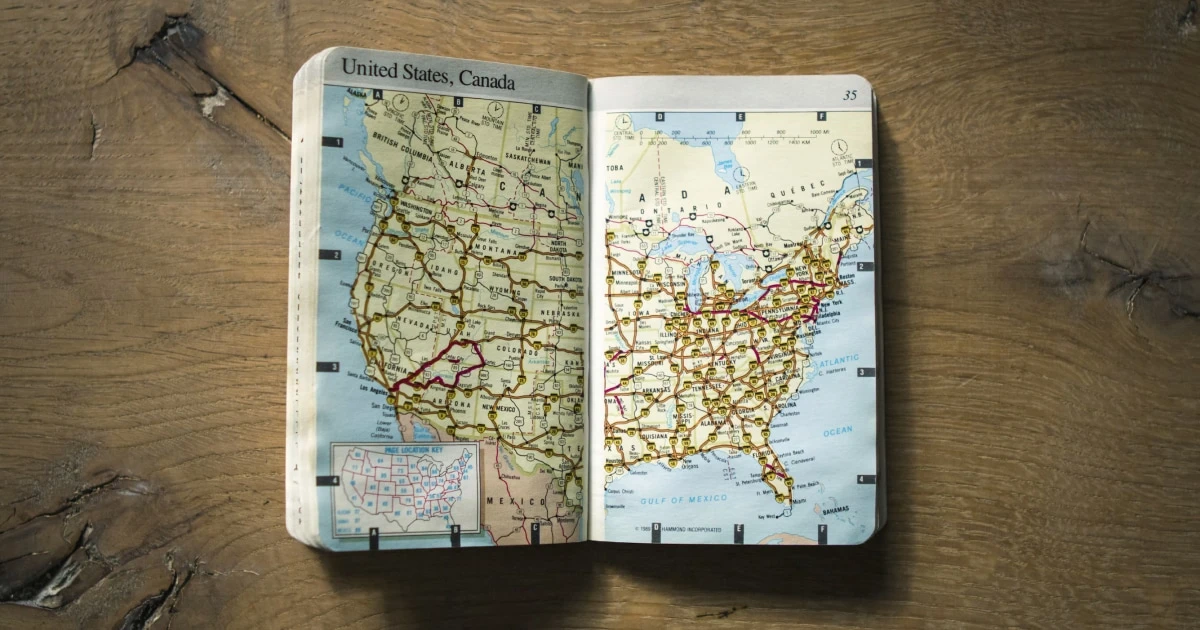
A multi-day road trip gives you more flexibility than a single long drive, but it also creates a planning challenge: the weather may change between the day you leave and the day you return.
You might have clear skies for the first two days, then encounter strong winds, heavy rain or falling temperatures later in the journey. A fixed itinerary can make it difficult to respond, especially when accommodation, activities and driving distances are already booked.
The solution is not to rebuild your trip around every new forecast. It is to plan the important parts in advance, identify where weather could affect your decisions and leave room to adapt when the forecast becomes clearer.
1. Plan the route and the weather together
Start by outlining your main destinations, overnight stops and approximate driving distances. Then check the forecast along the route for each planned travel day.
Do not look only at the weather in the cities where you start and finish. Conditions can differ between regions, elevations and exposed stretches of road.
For each stage, consider:
- Precipitation: Could heavy rain or snow affect the drive or your outdoor plans?
- Wind: Are there exposed roads or sections where strong gusts could make driving more difficult?
- Temperature: Could heat, cold or near-freezing conditions affect comfort or driving conditions?
- Visibility: Is fog or heavy precipitation possible during the hours you expect to drive?
- Timing: Are the expected conditions likely to occur while you are on the road or after you arrive?
This first check is useful for identifying potential conflicts. It is not a guarantee of what the weather will be like on each day, particularly when the trip is still several days away.
Wayther can help you examine forecast conditions along a driving route and compare available routes or departure times. Use it to explore your options, then revisit the forecast as the trip approaches.
2. Separate fixed plans from flexible plans
Not every part of a road trip is equally easy to change.
A hotel booked with a strict cancellation policy, a ferry departure or a timed event may require you to keep a particular date. A scenic drive, an outdoor activity or an extra night in a region may be easier to move.
Before departure, divide your itinerary into two categories.
Fixed commitments
These might include:
- Accommodation that cannot easily be changed.
- Ferry, train or other transport reservations.
- Tickets for a specific date or time.
- A destination you must reach by a certain day.
Flexible plans
These might include:
- Scenic detours.
- Outdoor activities that can move to another day.
- Optional stops and sightseeing.
- The timing of a driving stage.
- An extra overnight stay, if accommodation is available.
Use the forecast to help decide where flexibility matters most. If one day includes a long exposed drive and another is mostly spent in a city, changing their order may be more useful than changing the whole trip.
When booking accommodation, check the cancellation and modification terms rather than assuming that every reservation can be changed without cost.
3. Use long-range forecasts to compare options, not to lock in decisions
Weather forecasts are useful for planning ahead, but their detail and confidence change with forecast lead time.
Several days before departure, a forecast may suggest that one region is likely to be wetter or windier than another. It may not reliably establish the exact hour when rain will begin or the conditions at a particular road junction.
The Met Office explains that uncertainty increases as forecasts extend further into the future, partly because small differences in the estimated state of the atmosphere can lead to different outcomes. Ensemble forecasts help show the range of possible scenarios rather than relying on a single prediction.
For a multi-day road trip, use this distinction:
- Several days ahead: Compare broad patterns, possible travel dates and alternative routes.
- The day before a stage: Review the updated forecast for the next drive.
- Before departure: Check current official warnings, road restrictions and the latest forecast.
- During the trip: Reassess future stages as new information becomes available.
Avoid making expensive changes based on a single long-range forecast unless there is a compelling reason. Equally, do not ignore a potentially serious weather risk just because the forecast could change.
For more detail, read Why Weather Forecasts Change Along a Road Trip.
4. Decide which days should stay flexible
Some stages are more sensitive to weather than others.
A long motorway drive may be manageable in ordinary rain with appropriate driving adjustments, while a mountain crossing, a coastal road exposed to strong winds or a remote route with few alternatives may require more careful planning.
Identify the stages where conditions could have a greater impact.
Mountain routes
Check temperature, precipitation, visibility, wind and official road information. A forecast alone cannot tell you whether a pass is open or whether a particular section is icy.
If the route depends on a mountain pass, keep a practical alternative in mind and check local restrictions before leaving.
Coastal and exposed roads
Wind can vary significantly along exposed stretches. If your route includes a high-sided vehicle, trailer or caravan, take wind forecasts and official advice seriously.
Remote stretches
Consider the distance between fuel stations, charging points, services and places where you can safely stop. Weather-related delays may be more difficult to manage when alternatives are limited.
Long driving days
A long stage leaves less flexibility if you need to slow down, take additional breaks or wait for conditions to improve. Consider splitting the drive if the forecast is difficult or if the planned schedule leaves little margin.
Read How to Plan a Long Drive in Bad Weather for more guidance.
5. Change the order of your stops when it makes sense
A multi-day itinerary often offers an option that a single-day journey does not: changing the order of destinations.
Suppose you plan to spend two days in a mountain region followed by two days on the coast. If the mountain forecast looks difficult on your planned arrival date but improves later, you might be able to visit the coast first.
This approach works best when:
- Your accommodation can be rearranged.
- The alternative route is practical.
- The change does not create a more demanding driving day.
- The weather improvement is supported by updated forecasts.
- The new schedule does not introduce other problems, such as arriving after dark or missing a booking.
Do not assume that swapping two days will always improve the trip. Weather may deteriorate in both locations, and a change can add distance or introduce new risks.
Compare the entire revised itinerary, including driving time, road type, accommodation and the forecast for each stage.
6. Choose the best departure time for each stage
You do not necessarily need to change the overnight stops to improve a journey. Sometimes the departure time is the more practical variable.
For example, leaving later may allow morning fog to clear. Leaving earlier could help you finish a long drive before temperatures rise or before a period of rain is expected.
But the best time depends on the whole journey. An early start might mean driving in darkness or frost, while a later departure could leave you arriving tired or in poor visibility.
Before changing the time, consider:
- Expected weather near departure and arrival.
- The forecast along the intermediate sections.
- Traffic and the type of road.
- Daylight and driver fatigue.
- Whether you have enough flexibility at the destination.
Wayther lets you compare forecast conditions along a route and explore different departure times. Use the comparison to identify potentially better options, then check the updated forecast and official road information before deciding.
See How to Find the Best Time to Travel by Road for a more detailed approach.
7. Keep a weather-aware backup plan
A useful backup plan is specific enough to act on, but does not require you to predict the weather perfectly.
For each potentially difficult stage, identify:
- The main route and planned departure time.
- A realistic alternative route, if one exists.
- A later departure time or an extra overnight stop.
- Official sources for weather alerts and road closures.
- Any bookings or activities that would need to change.
If the weather deteriorates, compare these options rather than improvising at the last moment.
An alternative route is not automatically safer because its forecast looks better. It may involve more distance, narrower roads, steeper gradients or fewer services. Confirm that the road is suitable for your vehicle and that it is open.
Likewise, do not assume that a forecast with less rain means that a road is free of flooding, ice or other hazards. Weather forecasts describe expected atmospheric conditions, not the exact state of the road.
8. Keep your daily driving distance realistic
A schedule with very long driving days can make a road trip less resilient to changing weather.
If you have planned every hour, a delay caused by heavy rain, congestion or an unexpected stop can affect accommodation and activities for the rest of the day.
Build some margin into your schedule:
- Avoid making every driving day as long as your available time allows.
- Allow for regular rest breaks.
- Consider shorter stages through mountainous or unfamiliar terrain.
- Avoid relying on a precise arrival time when conditions may be difficult.
- Keep enough flexibility to stop or postpone a section if necessary.
A shorter stage may also give you more time to enjoy a destination when the weather is favourable. The aim is not to drive as little as possible, but to avoid making the whole itinerary depend on perfect conditions.
9. Check road information separately from the forecast
Weather apps can help you understand what conditions are expected, but they cannot confirm every detail you need to know before driving.
Before each stage, check official sources for:
- Road closures and restrictions.
- Flooding or winter road conditions, where reported.
- Mountain-pass status and seasonal requirements.
- Traffic disruptions and diversions.
- Official weather warnings.
If severe weather is forecast, follow the advice from the relevant authorities. Postpone or change the trip when necessary rather than assuming that another route or departure time will remove the risk.
During the journey, check updates only when parked safely or through a passenger.
Wayther provides forecast-based weather information along your route. It does not guarantee road safety or provide authoritative confirmation of real-time road conditions.
10. A simple weather-planning routine for a multi-day trip
Before booking
- Identify the main destinations and approximate driving stages.
- Consider which stops and activities can be moved.
- Check whether the season creates particular weather concerns.
- Review cancellation and modification terms for important bookings.
Several days before departure
- Compare broad weather patterns across possible dates.
- Identify stages that may be sensitive to wind, rain, snow or visibility.
- Consider alternative routes and flexible overnight stops.
- Avoid treating a long-range forecast as a precise prediction.
Before each driving day
- Check the latest forecast along the planned route.
- Review official warnings and road information.
- Compare departure times or alternative routes if conditions may be difficult.
- Confirm that the vehicle and planned route are suitable for the conditions.
- Allow enough time for breaks and possible delays.
During the trip
- Review upcoming stages as forecasts are updated.
- Reorder flexible activities when it makes sense.
- Keep an alternative plan for stages with limited options.
- Stop or postpone driving if conditions become unsafe.
Conclusion
Planning a multi-day road trip around the weather is about balancing preparation with flexibility. Decide which parts of the itinerary are fixed, identify the stages where weather matters most and use longer-range forecasts to compare options rather than treating them as promises.
As each travel day approaches, check the updated forecast, consult official road information and adjust the plan when necessary. Sometimes changing a departure time is enough. Other times, the best decision is to switch destinations, stay an extra night or postpone a difficult crossing.
Wayther can help you compare forecast conditions along your route and explore alternative routes or departure times. Combined with updated forecasts and official road information, it can help you make more informed decisions throughout your trip.
Frequently asked questions
- How far ahead should I check the weather for a multi-day road trip?
- Start checking several days ahead to compare possible dates and routes, but treat forecasts for later stages as provisional. Review them again the day before each stage and check official warnings before departure.
- Should I plan my whole road trip around the weather?
- Use the forecast as one planning factor alongside distance, accommodation, road conditions and activities. Keep flexibility around stages where bad weather would significantly affect comfort or safety.
- Can I trust a 10-day forecast for a road trip?
- A 10-day forecast can help identify broad weather patterns, but the timing and local detail are generally less certain than in a short-range forecast. Recheck conditions as each travel day approaches.
- What should I do if the weather changes during a road trip?
- Review official weather warnings and road information, then consider delaying departure, changing the route, shortening the day's drive or staying an extra night. Do not continue into conditions that make the journey unsafe.
Before your next journey
Check the forecast for the road ahead.
Wayther is a road trip weather app for drivers, available on iPhone and iPad. It provides hour-by-hour road trip weather at every point on your route, timed to when you'll be there. Compare routes, find the best time to leave, plan 10 days ahead. Try it free.

Keep reading

How to Find the Best Time to Travel by Road
Find the best time to start a road trip by comparing weather along your route, expected arrival times and daylight before you leave.
Should You Change Your Route or Your Departure Time?
Learn when to change your driving route, delay departure or keep your original plan when bad weather is forecast.
How to Plan a Road Trip Around the Weather
Plan your route, compare weather along the way, and find a better departure time. A step-by-step guide to planning a road trip around the forecast.